
 By admin@seaislenews.org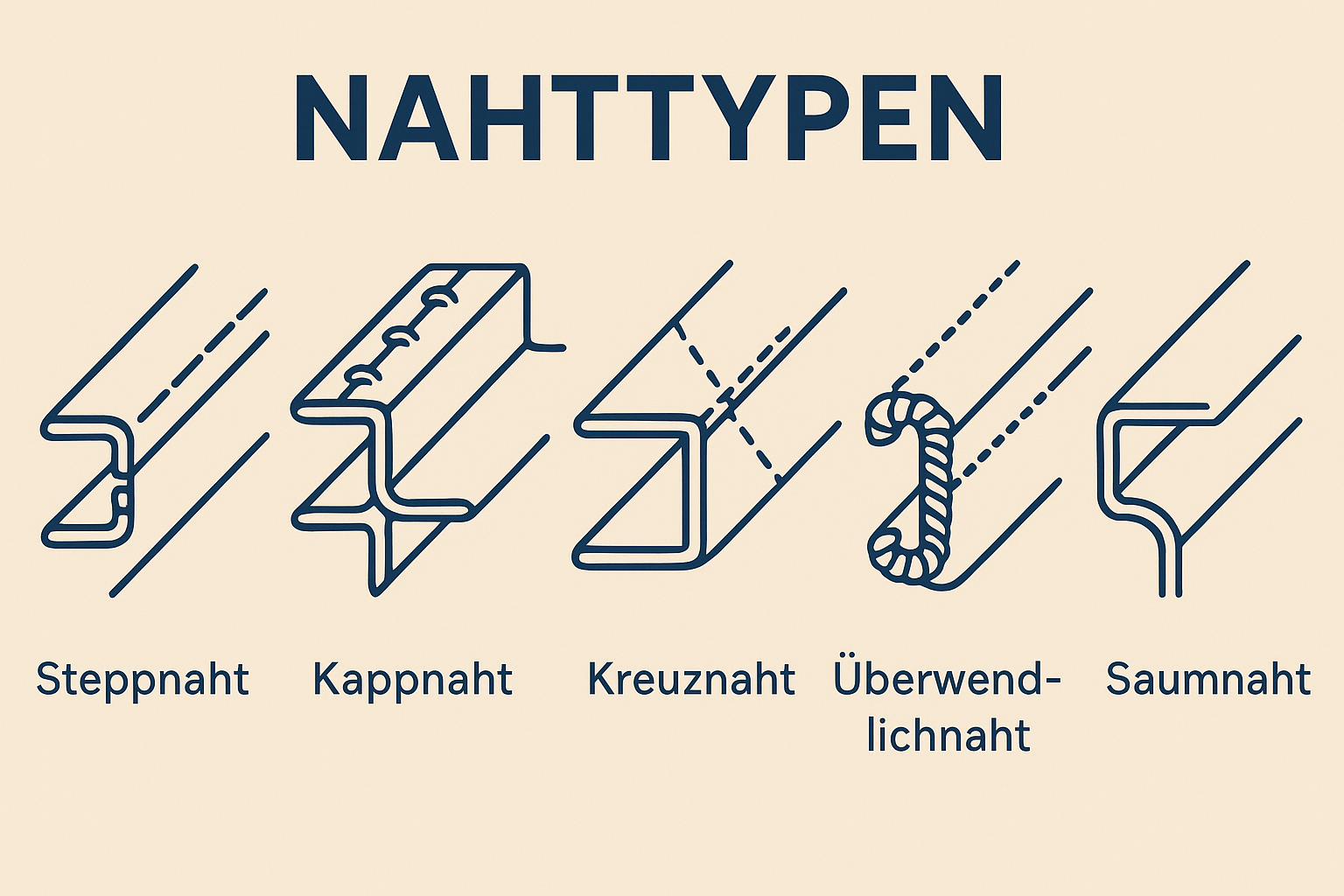
In manufacturing, details determine durability. A product can feature cutting-edge materials, advanced automation, and world-class design—but if its seams fail, everything fails. That’s why understanding Nahttypen, or seam types, is more than a technical exercise. It’s a strategic decision that impacts product performance, brand reputation, scalability, and cost control.
For startup founders launching physical products, entrepreneurs entering textile or hardware markets, and tech professionals building next-generation wearables or industrial solutions, mastering Nahttypen is not optional. It’s foundational.
This article breaks down what Nahttypen are, why they matter, and how choosing the right seam type can strengthen both your product and your business model.
What Are Nahttypen?
The term Nahttypen originates from German manufacturing and textile engineering terminology and translates directly to “types of seams.” In practice, it refers to the structural methods used to join two or more materials together—typically fabrics, but also leather, composites, and flexible technical materials.
While the concept sounds simple, the choice of seam type affects:
- Product durability
- Water and air resistance
- Aesthetic quality
- Production speed
- Cost structure
- Repairability and lifecycle
If you’re building apparel, outdoor gear, medical textiles, automotive interiors, or wearable tech, your seam design can either become a hidden strength—or a silent liability.
Why Nahttypen Matter for Startups and Innovators
Early-stage companies often focus heavily on design and marketing, assuming manufacturing details can be optimized later. But seam engineering decisions made during prototyping frequently carry forward into mass production.
Consider a few real-world examples:
A performance sportswear startup selects a basic plain seam to reduce production cost. Months after launch, customer returns spike because the seams chafe during long-distance runs.
A hardware founder developing smart heated jackets overlooks seam sealing. Early customers complain about moisture intrusion damaging electronics.
An eco-conscious brand chooses flat-felled seams that improve durability and reduce repair frequency, strengthening both sustainability claims and customer loyalty.
In each case, the Nahttypen decision directly influenced brand perception and long-term profitability.
The Most Common Nahttypen and Their Applications
To understand seam strategy, let’s examine the most widely used Nahttypen and where they perform best.
Plain Seam (Simple Seam)
The plain seam is the most basic seam type. Two fabric edges are placed together and stitched. It is widely used due to its simplicity and efficiency in production.
It works well for lightweight garments and interior seams that are not exposed to high stress. However, it offers minimal reinforcement and limited durability under tension.
For startups optimizing for cost and speed, the plain seam is attractive—but it’s rarely sufficient for high-performance products.
French Seam
The French seam encloses raw fabric edges within a second seam. This creates a clean interior finish and prevents fraying.
It is commonly used in luxury garments and lightweight fabrics. While aesthetically refined, it is not ideal for heavy materials or high-tension areas.
Brands focused on premium presentation and comfort often rely on this seam type.
Flat-Felled Seam
The flat-felled seam is known for strength and durability. The fabric edges are folded and stitched down, creating a robust and flat finish.
This seam type is commonly found in denim jeans, workwear, and performance apparel. It reduces bulk while increasing structural integrity.
For founders building durable consumer goods, flat-felled seams often strike the right balance between strength and professional finish.
Lapped Seam
In a lapped seam, one piece of material overlaps another before stitching. It is commonly used in leatherwork and technical textiles.
This seam provides flexibility and strength, making it useful for automotive interiors and industrial materials.
For hardware startups integrating soft materials into rigid systems, lapped seams can enhance reliability.
Bound Seam
A bound seam wraps raw edges with binding tape or fabric to prevent fraying and improve comfort.
It is frequently used in sportswear, outdoor gear, and visible interior finishes. It enhances durability while providing a refined aesthetic.
Brands emphasizing user experience often adopt bound seams in customer-facing areas.
Taped or Sealed Seam
Taped seams are essential in waterproof or weather-resistant products. After stitching, a waterproof tape is heat-applied over the seam to prevent water penetration.
Outdoor gear companies and wearable tech startups operating in extreme environments depend heavily on this Nahttypen variation.
Skipping seam sealing in moisture-sensitive applications can be catastrophic.
Comparing Nahttypen at a Glance
Below is a simplified comparison of common seam types and their strategic trade-offs:
| Seam Type | Durability | Production Cost | Best Use Case | Aesthetic Finish |
| Plain Seam | Low–Medium | Low | Lightweight garments | Basic |
| French Seam | Medium | Medium | Luxury and delicate fabrics | Clean interior |
| Flat-Felled Seam | High | Medium | Workwear, denim, high-stress areas | Professional |
| Lapped Seam | High | Medium–High | Leather, technical textiles | Functional |
| Bound Seam | Medium | Medium | Sportswear, comfort garments | Refined |
| Taped/Sealed Seam | High | High | Waterproof and outdoor products | Technical |
For entrepreneurs, this table highlights a crucial reality: seam selection is a strategic balance between cost, durability, and brand positioning.
Nahttypen in the Age of Smart Textiles and Wearables
As products become smarter, seams become more complex.
Wearable technology integrates sensors, conductive threads, heating elements, and flexible batteries. The wrong seam type can disrupt electrical pathways or create stress points that damage embedded components.
For example, flat seams are often preferred in wearables to reduce pressure points against the skin. Meanwhile, sealed seams protect electronics from sweat and environmental moisture.
If you’re building hardware-integrated apparel, your Nahttypen decisions must align with both mechanical and electrical engineering considerations.
Manufacturing Efficiency and Scalability
Seam types influence not only product performance but also production scalability.
Plain seams are quick to sew and easy to automate. Flat-felled seams require more steps but can be streamlined with specialized machinery. Taped seams demand additional equipment and quality checks.
For founders moving from prototype to large-scale manufacturing, each seam type adds time per unit. Over thousands of units, even small time differences impact margins.
Smart startups evaluate seam types during early design stages rather than retrofitting improvements after launch.
Sustainability and Lifecycle Thinking
Sustainability is increasingly shaping product design decisions. Seam construction plays a significant role in product longevity.
Stronger Nahttypen extend product life and reduce waste. Durable seams mean fewer returns, fewer replacements, and stronger resale potential.
Additionally, certain seam types simplify repair. Brands that design for repairability often choose seams that can be opened and resewn without damaging materials.
From a circular economy perspective, seam engineering is a quiet but powerful sustainability lever.
Quality Control and Testing
Even the best seam type fails without proper testing.
Tensile strength tests measure how much force a seam can withstand. Abrasion tests simulate long-term wear. Waterproof testing verifies seam sealing effectiveness.
Tech-driven companies often use data to refine seam performance, running small production batches and iterating based on stress test results.
In competitive markets, durability claims must be backed by measurable data—not marketing promises.
Common Mistakes When Choosing Nahttypen
Founders frequently underestimate seam complexity. Some common pitfalls include:
Choosing seam types based solely on cost rather than use-case demands.
Ignoring material compatibility.
Failing to account for user movement and stress points.
Overengineering seams for low-stress applications, inflating costs unnecessarily.
The smartest approach is contextual decision-making: align seam type with product function, brand positioning, and long-term strategy.
The Business Case for Seam Expertise
Investors and partners rarely ask about seam construction directly. But they do ask about return rates, product durability, customer satisfaction, and scalability.
Behind many of these metrics lies a quiet engineering decision about Nahttypen.
Companies that treat seam engineering as part of product strategy—not an afterthought—build stronger brands. They reduce warranty claims, improve user experience, and differentiate through quality.
In highly competitive markets, durability becomes a form of marketing.
Conclusion: Why Nahttypen Deserve Strategic Attention
At first glance, seam types may seem like a narrow technical detail. But in reality, Nahttypen represent a convergence of engineering, design, manufacturing efficiency, and brand strategy.
For startups and innovators building physical products, understanding seam types is a competitive advantage. It influences product longevity, production cost, sustainability, and customer satisfaction.
The difference between a product that lasts and one that fails often comes down to what holds it together.
In a world increasingly driven by rapid innovation and disposable goods, companies that master the fundamentals—like seam construction—position themselves for long-term success.
When you design your next product, don’t just think about how it looks or what features it offers. Think about how it’s joined. Because in manufacturing, strength is stitched into the details.