
 By admin@seaislenews.org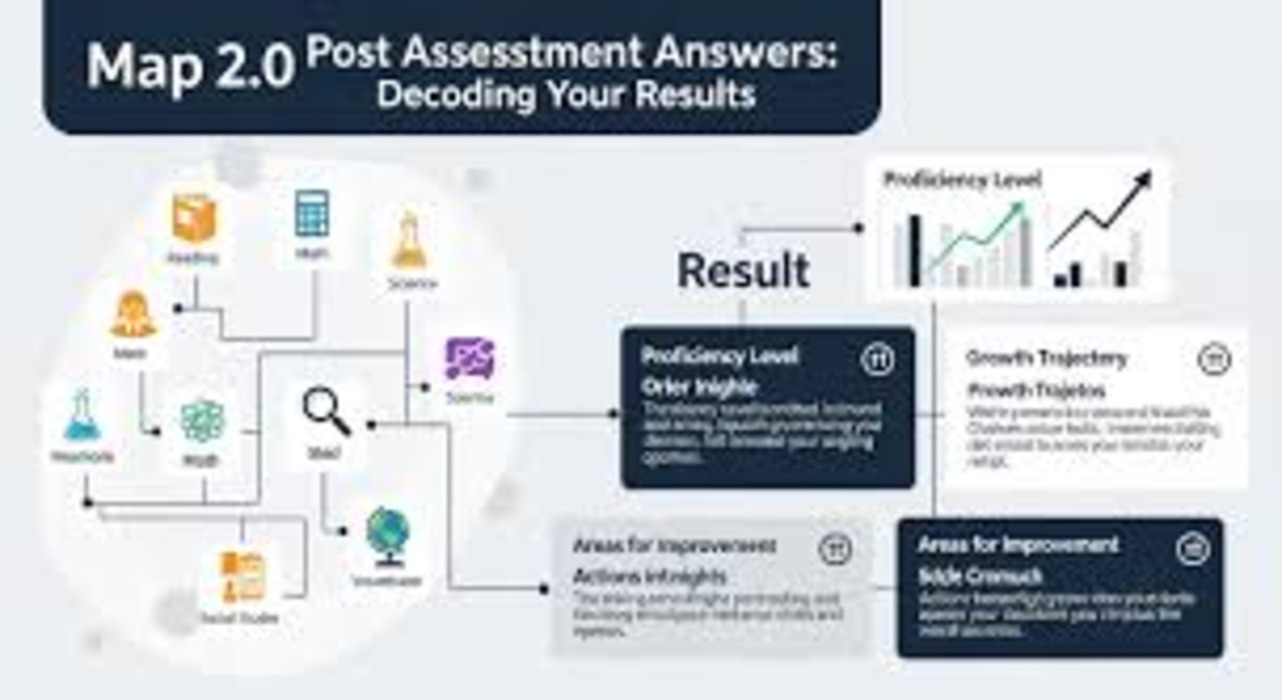
In the modern landscape of education and professional development, understanding learning outcomes is more critical than ever. The MAP 2.0 post assessment answers provide a key lens into student growth, skill acquisition, and instructional effectiveness. For educators, startup founders in edtech, and professionals designing digital learning solutions, analyzing these answers is not just about grading—it’s about creating actionable insights that improve learning experiences and organizational outcomes.
What Are MAP 2.0 Post Assessment Answers?
The MAP 2.0 post assessment is designed to measure progress over time rather than simply providing a static snapshot of knowledge. Unlike traditional tests that focus solely on right or wrong answers, MAP 2.0 emphasizes growth, adaptability, and applied understanding.
The post assessment answers are more than solutions—they serve as a tool for diagnosing strengths, identifying gaps, and guiding future instruction. In a startup context, these insights can be translated into personalized learning platforms, AI-driven recommendations, and analytics dashboards that help educators or teams optimize performance.
How MAP 2.0 Post Assessment Works
MAP 2.0 assessments utilize adaptive testing, meaning the difficulty of each question adjusts according to the learner’s responses. This ensures that results are accurate across skill levels and provide meaningful data for both high-achieving and struggling learners.
Key Features of MAP 2.0
| Feature | Function | Practical Benefit |
| Adaptive Questioning | Adjusts question difficulty dynamically | Measures true skill level without frustration or ceiling effects |
| Growth Tracking | Compares pre- and post-assessment scores | Identifies specific areas of improvement and retention |
| Actionable Reporting | Breaks down performance by skill or topic | Guides curriculum adjustments and learning interventions |
| Predictive Analytics | Forecasts potential performance trends | Helps plan targeted instruction and resource allocation |
By integrating these features, educators and tech innovators can move beyond superficial scores and focus on measurable growth.
Real-World Applications for Educators and Startups
The relevance of MAP 2.0 post assessment answers extends far beyond schools. Startups in digital learning can leverage these insights to refine educational apps, personalized tutoring platforms, and corporate training programs.
For example, a learning management system (LMS) startup can use post assessment answers to:
- Identify which topics students struggle with most.
- Customize lesson paths based on prior performance.
- Track engagement and predict future learning outcomes.
This data-driven approach ensures that resources are used effectively, leading to higher learner engagement and measurable improvements.
The Educational Impact of MAP 2.0
In classrooms, MAP 2.0 post assessment answers allow teachers to adopt a precision approach to instruction. By analyzing patterns in student responses, educators can differentiate instruction for individual learners, focus intervention strategies, and improve lesson planning.
For instance, in a math classroom, post assessment answers might reveal that a group of students understands addition but struggles with fractions. This insight enables targeted interventions that maximize teaching efficiency and student outcomes.
Common Misconceptions About MAP 2.0
Despite its growing adoption, several misconceptions persist:
- It’s Just a Test – In reality, MAP 2.0 is a diagnostic tool that supports long-term learning improvement.
- Scores Are Absolute – Post assessment answers are relative to individual growth, not fixed benchmarks.
- It Replaces Teacher Expertise – The assessment complements professional judgment rather than substituting it.
Recognizing these distinctions is essential for using MAP 2.0 effectively and ethically.
Leveraging MAP 2.0 Post Assessment Answers in EdTech
For edtech startups, MAP 2.0 answers provide a treasure trove of actionable insights. Here are some strategies for applying them:
- Personalized Learning: Adaptive learning algorithms can adjust content based on performance data.
- Predictive Analytics: Early detection of learning gaps allows proactive intervention.
- Curriculum Optimization: Aggregate performance data informs which concepts need reinforcement.
- Gamification and Engagement: Insights from post assessments can guide interactive content that reinforces weak areas.
By turning post assessment answers into actionable strategies, startups can deliver measurable impact to both learners and institutions.
Challenges and Considerations
While MAP 2.0 is powerful, effective implementation requires care:
- Data Privacy: Ensure compliance with regulations like FERPA or GDPR.
- Teacher Training: Educators must understand how to interpret and act on assessment data.
- Avoid Over-Reliance on Scores: Balance quantitative results with qualitative observations and engagement metrics.
Thoughtful use ensures that MAP 2.0 post assessment answers lead to meaningful improvements rather than mere data collection.
Future Directions
The future of MAP 2.0 post assessment answers is closely tied to AI, adaptive learning, and predictive modeling. As startups continue to innovate, post assessment data could integrate with smart tutoring systems, personalized career pathways, and even VR/AR-enhanced learning modules, creating richer, more tailored educational experiences.
For founders, understanding these answers offers a unique advantage: the ability to design solutions that are both data-driven and learner-centered, meeting the growing demand for personalized education globally.
Conclusion
MAP 2.0 post assessment answers are more than a set of solutions—they are a blueprint for understanding growth, optimizing instruction, and delivering measurable learning outcomes. For educators, tech innovators, and startup founders, leveraging these answers unlocks opportunities to transform traditional learning into a data-informed, adaptive, and impactful experience. By turning assessment data into actionable insights, we can empower learners, improve teaching efficacy, and create scalable solutions for the future of education.