
 By admin@seaislenews.org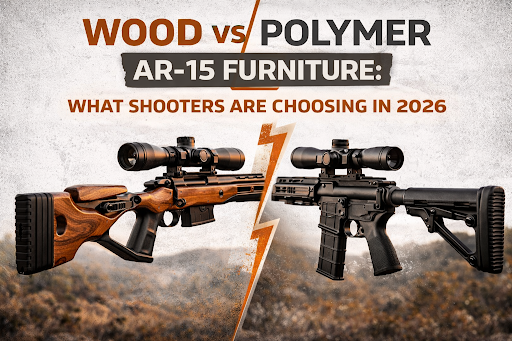
Not long ago, if you asked someone about AR-15 furniture, the answer was almost automatic—polymer.
It made sense. Polymer is lightweight, affordable, and tough enough to survive just about anything. It became the standard for a reason, and most AR-15s that come out of the box today still wear polymer stocks and handguards.
But if you’ve spent any time looking at rifle builds recently—whether it’s on forums, Instagram pages, or just walking the line at a local range—you’ve probably noticed something interesting.
Wood is showing up again.
And not just on old hunting rifles or retro builds. People are putting wood furniture on modern AR platforms, and in a lot of cases it actually looks right at home there.
Polymer Still Makes a Lot of Sense
Before anyone starts declaring wood the new king of AR furniture, it’s worth remembering why polymer became so popular in the first place.
It’s hard to beat for practicality.
Polymer furniture is light, durable, and extremely resistant to weather. Rain, heat, mud—it handles all of it without much fuss. If you’re running a rifle in tough conditions or trying to keep weight down, polymer is usually the logical choice.
There’s also the fact that polymer keeps costs reasonable. It’s one of the reasons AR-15s became so accessible in the first place.
So polymer isn’t going anywhere. For many shooters, it’s still the easiest and most practical option.
But practicality isn’t the only thing people care about anymore.
The Appeal of Wood on a Modern Rifle
Wood brings something different to the table.
Part of it is visual—there’s no denying that a rifle with well-finished wood furniture just has character. No two pieces of wood are exactly the same, which means every rifle ends up looking slightly unique.
But most shooters who try wood furniture talk about something else first: how it feels.
Wood has a different kind of balance in the hands. It tends to feel more solid, a little more grounded. It also behaves differently in temperature changes. On a cold morning at the range, polymer can feel icy. Wood usually doesn’t.
That’s one of the reasons some builders are experimenting with modern wood furniture setups like the Bravado Stock and Handguard Kit, which brings hardwood design into the AR-15 platform without losing compatibility with modern rifles.
It’s a good example of how wood can be adapted to a platform that was originally built around synthetic materials.
Wood Isn’t the Same as It Used to Be
One thing that surprises people is how much wood rifle furniture has evolved.
Older wood stocks were often heavy and sometimes fragile compared to modern materials. Today’s designs are different. Many manufacturers combine traditional woodworking with modern engineering techniques, reinforcing key areas so the furniture holds up to real use.
That combination of traditional material and modern design is part of what’s bringing wood back into the conversation.
It’s not about nostalgia anymore—it’s about blending craftsmanship with performance.
A Growing Interest in Craftsmanship
There’s also a broader shift happening in the firearms world.
For a long time, the AR-15 market was dominated by purely tactical aesthetics—black polymer, aggressive lines, and purely functional designs.
Lately, though, more shooters seem to appreciate well-made components. People are paying attention to materials again. Fit, finish, and craftsmanship matter more than they did ten or fifteen years ago.
That’s part of why collections like the WOOX High-Grade Series are gaining attention. They focus on material quality and craftsmanship instead of just tactical styling.
For shooters who enjoy the build process as much as the shooting itself, those details make a difference.
Custom Builds Are Driving the Trend
Another reason wood furniture is appearing more often is simply because rifle customization has exploded.
A lot of AR owners don’t just buy a rifle and leave it alone anymore. They tweak it, swap parts, experiment with setups. Sometimes the rifle evolves over months or even years.
Furniture is one of the easiest ways to change the personality of a build. A different stock or handguard can make a rifle feel completely different—even if everything else stays the same.
Polymer keeps things simple. Wood makes the rifle feel more personal.
So Which One Should You Choose?
That depends on what you want from your rifle.
If you’re building something ultra-lightweight or planning to run it hard in rough environments, polymer still makes a lot of sense. It’s reliable and proven.
But if you appreciate craftsmanship, aesthetics, and a slightly different feel in the hands, wood furniture offers something polymer can’t really replicate.
Neither option is wrong. It just comes down to preference—and how you want your rifle to feel when you pick it up.
The interesting thing about the wood versus polymer debate is that it reflects a bigger change in the shooting community.
Rifles aren’t just tools anymore. For many enthusiasts, they’re projects. Something you build over time, tweak, and refine until it feels exactly right.
Polymer will probably remain the most common AR-15 furniture material for a long time. But wood is carving out its own space again, especially among shooters who appreciate craftsmanship and a rifle that stands out a little.
And judging by how many modern builds are starting to feature it, wood furniture might just be getting started.