
 By admin@seaislenews.org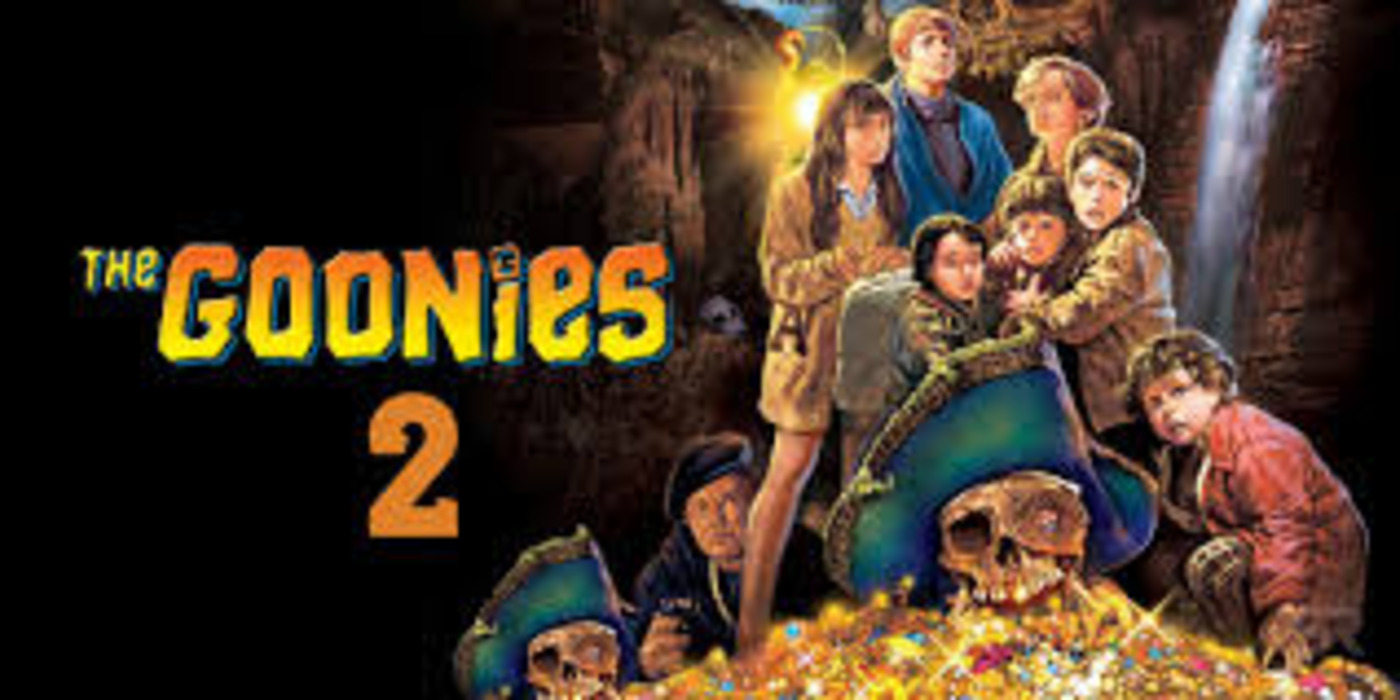
In 1985, The Goonies captured the imagination of a generation. It wasn’t just a treasure hunt story; it was a narrative about grit, loyalty, and unlikely heroes navigating uncertainty together. Decades later, the phrase “goonierne 2” has taken on a symbolic life of its own. It evokes the idea of a sequel—not merely in film, but in business, technology, and culture.
For startup founders and tech leaders, goonierne 2 is more than nostalgic curiosity. It represents a powerful concept: what happens after the breakthrough. What does the second act look like once the scrappy origin story ends? How do you innovate when you’re no longer the underdog but the incumbent?
In today’s digital economy, the sequel mindset may be the most underappreciated growth strategy.
The Sequel Economy and the Rise of Goonierne 2
Hollywood has long understood the financial logic of sequels. Franchises reduce risk by building on established intellectual property and loyal audiences. Consider how Top Gun: Maverick revived a decades-old brand and turned nostalgia into a multibillion-dollar success story. Or how Jurassic World reimagined a beloved universe for a new generation.
But the goonierne 2 phenomenon is not limited to cinema. In technology and entrepreneurship, we are living in an era of sequels. Founders launch second startups after exits. Companies reinvent their business models. Platforms pivot to survive disruption. The sequel is no longer an afterthought; it is the strategy.
The challenge, however, is that second acts are inherently harder than first acts. The first version is driven by urgency and hunger. The sequel must balance legacy with innovation. It must honor the original story while daring to evolve.
Why Second Acts Matter More Than First Wins
For early-stage founders, the first win feels like validation. Product-market fit is achieved. Funding rounds close. Growth accelerates. But that first chapter can create a dangerous illusion: that momentum is permanent.
History tells a different story. Even industry giants must reinvent themselves to stay relevant. Apple Inc. did not stop at the Macintosh. It reinvented itself with the iPod, then the iPhone, then services. Microsoft transitioned from desktop dominance to cloud leadership. Netflix moved from DVD rentals to streaming to original content production.
Each of these transformations was, in essence, a goonierne 2 moment—a sequel that could have failed but instead redefined the company’s trajectory.
The lesson for entrepreneurs is clear: the first success creates opportunity, but the second defines longevity.
Goonierne 2 and the Psychology of Reinvention
There is a psychological barrier to writing a sequel. Success breeds comfort. Comfort reduces risk tolerance. Yet innovation requires risk.
The goonierne 2 mindset challenges leaders to embrace creative tension. It asks uncomfortable questions:
Are we protecting our past more than building our future?
Are we optimizing what worked instead of exploring what’s next?
Are we listening to customers’ evolving needs or clinging to yesterday’s validation?
In the startup ecosystem, this mindset often appears after an exit. Serial entrepreneurs frequently describe the second venture as more intentional, more disciplined, and paradoxically more daring. They have less to prove but more to protect. That tension sharpens decision-making.
For technical teams, the sequel phase also demands architectural maturity. Early systems are built for speed. Second-generation platforms are built for scale. That shift requires cultural change, not just technical upgrades.
The Business Case for the Goonierne 2 Strategy
The sequel model is not just emotional; it is economically rational. Building on existing assets lowers acquisition costs, strengthens brand equity, and accelerates trust.
Below is a simplified comparison of first-act startups versus goonierne 2 ventures:
| Dimension | First Act Startup | Goonierne 2 Strategy |
| Brand Recognition | Minimal or none | Established audience |
| Risk Profile | High uncertainty | Reduced uncertainty |
| Capital Efficiency | Experimental spending | Strategic allocation |
| Customer Trust | Must be earned | Already developed |
| Innovation Focus | Discovery | Reinvention and scaling |
For digital founders, this comparison highlights a crucial insight: the sequel strategy leverages accumulated credibility. Instead of starting from zero, you start from experience, data, and community.
However, leverage can turn into liability if complacency sets in. Customers expect evolution. Markets demand novelty. Competitors exploit stagnation.
Innovation Without Betrayal
One of the hardest aspects of a sequel—whether in film or business—is honoring the original without being trapped by it. When sequels fail, they often misjudge this balance. They either copy the formula too closely or abandon it entirely.
The same dynamic plays out in technology companies. Consider how Meta Platforms rebranded from Facebook to signal a pivot toward the metaverse. The shift was bold, but it also carried reputational risk. Meanwhile, Amazon continuously reinvents itself—cloud computing, logistics, AI—while maintaining its core identity around customer obsession.
The goonierne 2 philosophy suggests that reinvention should feel inevitable, not forced. It should be rooted in the original mission, even as it expands beyond it.
For founders, this often means revisiting first principles. Why did we start? What core problem are we solving? If that problem evolves, how should we evolve with it?
Cultural Signals of a Healthy Sequel Organization
Organizations entering their second act reveal certain cultural traits. They value institutional memory but resist bureaucracy. They celebrate early scrappiness while formalizing processes. They recruit leaders who can manage complexity without extinguishing creativity.
A healthy goonierne 2 culture does not romanticize the garage days. Instead, it reframes them as proof of resilience. The narrative shifts from “we were small and bold” to “we are experienced and bold.”
This subtle distinction matters. Experience can either dilute courage or deepen it. The difference lies in leadership intent.
Technology’s Endless Sequels
In the tech sector, every product update is a micro-sequel. Version 2.0 is not optional; it is expected. Platforms that fail to iterate disappear quickly.
Artificial intelligence, for example, is itself in a sequel phase. Early rule-based systems gave way to machine learning. Machine learning evolved into deep learning. Now generative AI is redefining human-machine collaboration. Each stage builds on the previous one while rendering parts of it obsolete.
For entrepreneurs operating in AI, fintech, healthtech, or SaaS, goonierne 2 thinking means planning beyond the MVP. It means architecting products that anticipate iteration. It means investing in adaptability as a core competency.
The Personal Sequel: Leadership in Goonierne 2
Beyond companies and products, there is a personal dimension to the sequel mindset. Leaders themselves go through second acts.
The founder who thrives in chaos may struggle in scale. The engineer who built the prototype may need to become a systems thinker. The visionary CEO may need to transform into a culture architect.
This evolution is uncomfortable. It requires humility. It requires unlearning.
Yet the most enduring leaders understand that their own growth is the ultimate goonierne 2 strategy. They reinvent themselves before the market forces them to.
Risk, Nostalgia, and the Future
Nostalgia is powerful. It fuels fan theories, social media speculation, and reboot campaigns. But nostalgia alone cannot sustain innovation. It can attract attention, but it cannot replace value creation.
The danger in any sequel—literal or metaphorical—is overreliance on past glory. Audiences change. Technology advances. Expectations rise.
The opportunity, however, is extraordinary. A well-executed sequel compounds trust and amplifies impact. It transforms a one-time success into a legacy.
In business, legacy is not about permanence. It is about relevance across cycles.
Conclusion: Writing Your Own Goonierne 2
Goonierne 2 is more than a hypothetical film follow-up. It is a metaphor for the second chapter every entrepreneur must eventually write. The startup phase is thrilling, but sustainability demands reinvention.
For founders and tech leaders, the question is not whether a sequel will happen. It is whether you will write it deliberately or let circumstances write it for you.
The sequel mindset invites courage without recklessness, evolution without betrayal, and ambition without complacency. It asks you to honor your origin story while refusing to be confined by it.
In a world defined by rapid change, the most resilient organizations are not those with the best first acts. They are the ones brave enough to create extraordinary second ones.
If your first breakthrough got you here, your goonierne 2 strategy will determine how far you go next.