
 By admin@seaislenews.org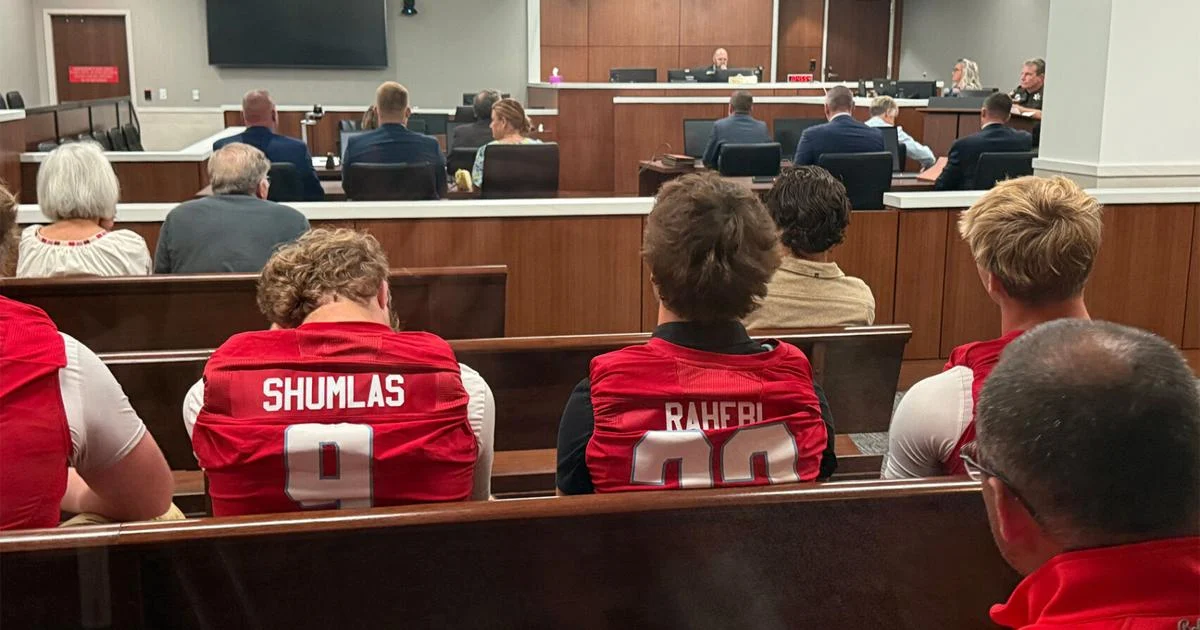
In recent months, the wiaa arrowhead high school waiver lawsuit has sparked conversations that stretch far beyond one football program in Wisconsin. What began as a dispute over eligibility rules quickly evolved into a broader debate about fairness, governance, parental rights, and how regulatory bodies adapt to modern educational realities. For startup founders and tech-minded professionals used to navigating policy, compliance, and innovation, the case offers a surprisingly relevant lens into how institutions manage change—and resistance to it.
At its core, the situation centers on Wisconsin Interscholastic Athletic Association (WIAA), the statewide body that governs high school athletics in Wisconsin. The dispute involves Arrowhead High School, a well-known school with a competitive athletic program, and questions about whether a student-athlete should have been granted a waiver to participate in sports following a transfer.
But beneath the headlines lies something more meaningful: a clash between rigid policy frameworks and evolving social, educational, and athletic realities.
Understanding the Framework: How the WIAA Governs Student Eligibility
To understand the waiver lawsuit, you first need to understand how the WIAA operates. Like many state athletic associations, it establishes rules governing student eligibility—especially in cases where a student transfers from one school to another.
Transfer rules exist primarily to prevent recruiting abuses. Without guardrails, schools with strong sports programs could theoretically attract athletes from other districts to build dominant teams. The WIAA’s policies are designed to protect competitive balance and maintain educational integrity.
Generally, when a student transfers schools, they may face a period of ineligibility unless the transfer meets certain criteria—such as a family move or other qualifying circumstances. In cases that fall outside standard parameters, families can request a waiver.
That waiver process is where the controversy began.
The Trigger: A Denied Waiver and Legal Action
The wiaa arrowhead high school waiver lawsuit emerged after a student-athlete’s transfer eligibility was challenged. According to public reporting and legal filings, the family sought a waiver that would allow immediate athletic participation. The WIAA denied the request, prompting legal action.
The lawsuit argued that the denial was either inconsistent, unfairly applied, or not aligned with the student’s specific circumstances. The WIAA, for its part, maintained that it was enforcing established rules designed to preserve fairness across member schools.
This isn’t the first time a state athletic association has faced legal scrutiny. Across the United States, transfer rules have repeatedly been challenged on constitutional grounds—ranging from equal protection claims to due process arguments.
But this case resonated because of the school involved and the broader social dynamics surrounding youth athletics.
Arrowhead High School: A Program Under the Microscope
Arrowhead High School is not an obscure institution. Located in a competitive athletic region, it has built a reputation for strong programs and consistent performance.
High-performing programs often find themselves in complex positions. On one hand, they are models of excellence and community pride. On the other, they face heightened scrutiny regarding transfers, recruitment allegations, and eligibility enforcement.
The waiver denial placed the school at the center of a statewide debate. Was the system protecting fairness—or punishing legitimate family decisions?
For many observers, the lawsuit became less about a single athlete and more about how rigid governance systems handle nuanced, human realities.
The Legal Dimension: Governance vs. Individual Rights
From a legal standpoint, cases like the wiaa arrowhead high school waiver lawsuit often hinge on several core questions:
- Does the governing body have clear authority under its bylaws?
- Were rules applied consistently?
- Was the waiver review process transparent and fair?
- Did the decision violate constitutional protections?
Courts historically grant significant deference to athletic associations, viewing them as voluntary membership organizations with internal governance authority. However, that deference is not unlimited. If a rule is arbitrary, discriminatory, or inconsistently enforced, it can face judicial intervention.
This tension mirrors regulatory battles in other sectors—especially in tech and startups. Founders regularly encounter rigid compliance frameworks that were built for a different era. When rules don’t evolve with reality, conflict follows.
Why Transfer Rules Exist—and Why They’re Controversial
Transfer rules in high school sports are meant to discourage:
- Athletic recruiting
- Competitive imbalance
- “Team shopping” by families seeking stronger programs
- Circumvention of district boundaries
Yet the modern landscape complicates these assumptions.
Families move for many reasons: employment shifts, educational needs, safety concerns, or personal circumstances. In today’s mobile, digitally connected society, geographic stability is no longer the norm.
The friction arises when a rule designed to stop recruitment intersects with a legitimate life change.
In the Arrowhead case, supporters of the lawsuit argue that waiver systems must adapt to more fluid educational patterns. Critics counter that loosening restrictions opens the door to abuse.
The Broader Landscape: Similar Disputes Nationwide
Wisconsin is hardly alone in facing such disputes. Athletic associations across the country—from California to Florida—have faced lawsuits over eligibility decisions.
Here’s a comparative snapshot:
| State | Governing Body | Common Transfer Rule | Legal Challenges in Past Decade |
| Wisconsin | WIAA | One-year ineligibility unless exception | Multiple waiver-related disputes |
| California | CIF | Sit-out period unless hardship proven | Several constitutional challenges |
| Texas | UIL | Residency-based eligibility | Frequent transfer appeals |
| Florida | FHSAA | Immediate eligibility in certain cases | Litigation over inconsistent rulings |
What makes the wiaa arrowhead high school waiver lawsuit particularly compelling is how it reflects a broader shift: increasing legal scrutiny of sports governance structures.
The Public Perception Factor
In today’s digital age, no governance dispute remains confined to boardrooms or court filings. Social media, local press, and community forums amplify narratives rapidly.
Public perception matters.
For the WIAA, maintaining institutional credibility is paramount. For Arrowhead High School, preserving its reputation as a program of integrity is equally important.
In governance disputes, reputational capital is often as significant as legal outcomes.
This is something startup founders understand deeply. When a company enforces a policy that affects customers or users, the explanation must be as strong as the rule itself. Transparency shapes trust.
Governance Lessons for Founders and Tech Leaders
Why should entrepreneurs care about a high school waiver lawsuit?
Because the principles at stake mirror challenges faced in scaling organizations:
1. Rules Must Evolve with Context
Policies built for yesterday’s realities can become liabilities. Just as tech companies must revisit outdated terms of service, athletic associations must evaluate whether transfer rules still reflect social norms.
2. Transparency Builds Legitimacy
Opaque decision-making processes invite legal and public backlash. Clear documentation, consistent application, and accessible appeal channels strengthen governance.
3. Fairness Is Both Objective and Perceived
Even if a rule is technically correct, stakeholders must believe it is fair. Legitimacy is as much about perception as procedure.
4. Edge Cases Test Systems
Waiver cases are edge cases. And edge cases reveal whether a system is flexible or brittle.
In technology, edge-case failures often expose architectural weaknesses. In governance, they expose policy rigidity.
The Human Side of the Dispute
It’s easy to analyze the wiaa arrowhead high school waiver lawsuit as an abstract governance issue. But at its heart is a student-athlete navigating adolescence, ambition, and opportunity.
High school athletics play a significant role in scholarship pathways, identity formation, and community belonging. Eligibility decisions can influence recruitment prospects, emotional well-being, and peer relationships.
Courts are often reluctant to interfere in athletic governance, but when personal impact is significant, legal action becomes understandable.
The lawsuit underscores a broader truth: systems may be institutional, but their consequences are deeply personal.
What Happens Next?
While specific legal outcomes depend on court proceedings and potential settlements, cases like this often lead to one of three outcomes:
- Judicial affirmation of the governing body’s authority.
- Court-ordered reconsideration of a waiver.
- Policy reform prompted by public scrutiny.
Even if the WIAA prevails legally, the publicity may prompt internal review of waiver criteria and processes.
Institutional reform often follows litigation—not because the organization was legally wrong, but because controversy exposes structural friction.
The Future of Athletic Governance
The modern educational ecosystem is more dynamic than ever. Virtual learning, inter-district enrollment, and hybrid schooling models challenge traditional geographic assumptions.
Athletic associations nationwide are grappling with:
- NIL (Name, Image, Likeness) implications at the high school level
- Increased parental advocacy
- Legal challenges rooted in constitutional arguments
- Growing professionalization of youth sports
The wiaa arrowhead high school waiver lawsuit fits within this larger evolution. It’s a reminder that governance structures designed decades ago must adapt to modern complexity.
Just as startups pivot in response to market realities, regulatory bodies must evolve in response to social change.
A Case Study in Institutional Resilience
For founders and digital professionals, the deeper takeaway is about resilience.
Institutions—whether athletic associations or tech companies—must balance:
- Stability vs. flexibility
- Authority vs. accountability
- Uniform rules vs. individualized judgment
The best systems are neither rigid nor arbitrary. They are principled yet adaptable.
When policies meet edge cases, the response determines institutional credibility.
Conclusion: Beyond One Waiver Decision
The wiaa arrowhead high school waiver lawsuit is not merely about a single student’s eligibility. It represents a broader dialogue about fairness, authority, and how institutions adapt under pressure.
For the WIAA, the case tests governance durability. For Arrowhead High School, it spotlights program integrity. For families, it highlights the stakes of bureaucratic decisions. And for entrepreneurs and innovators, it offers a familiar lesson: systems must evolve or risk conflict.
In a world where rules increasingly collide with mobility, opportunity, and digital-era fluidity, institutions that embrace transparency and thoughtful reform will thrive.
High school athletics may seem distant from the startup ecosystem—but the governance challenges are remarkably similar. And that is what makes this lawsuit more than a local story. It’s a window into how structured systems confront modern change.