
 By admin@seaislenews.org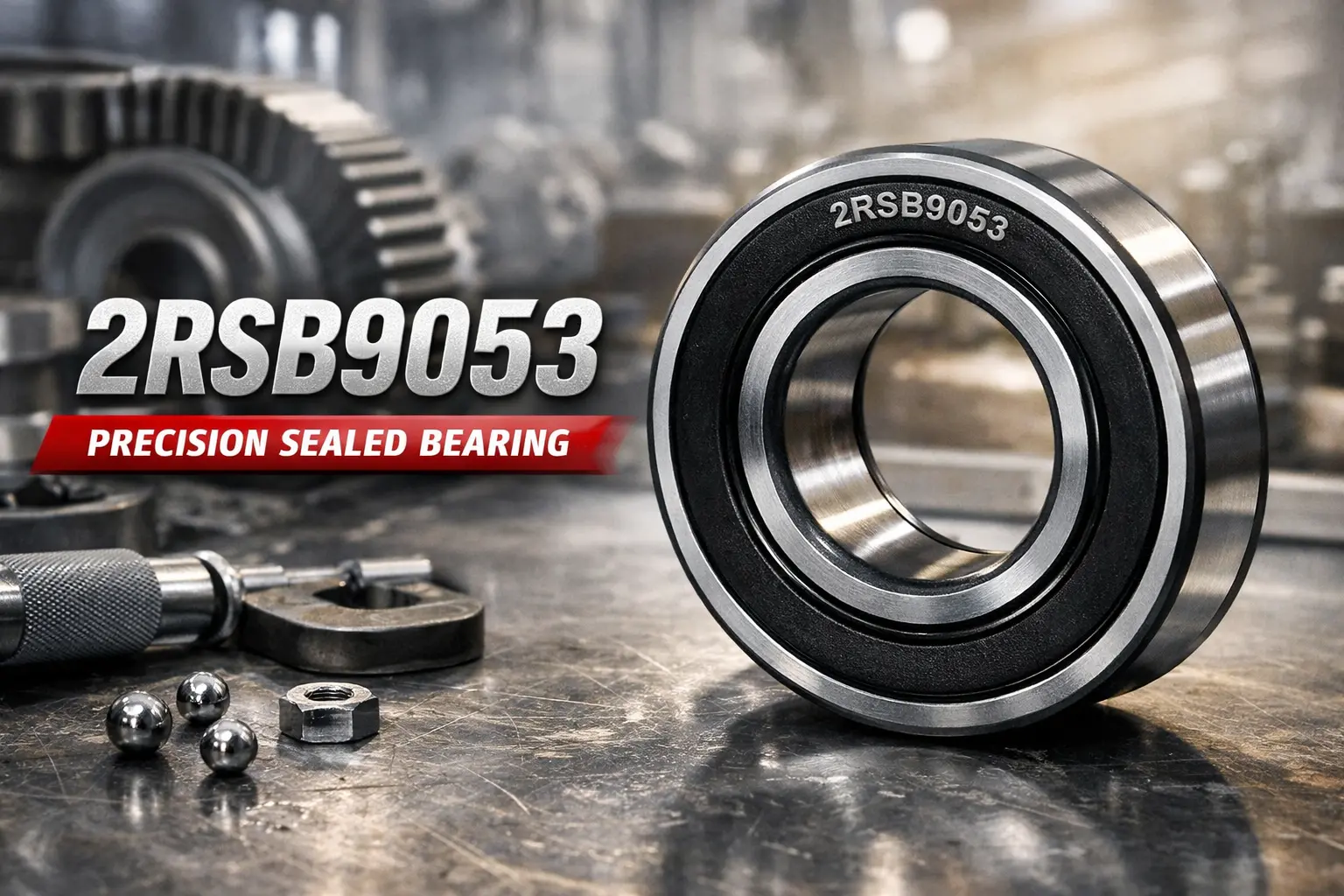
In the world of innovation, founders often obsess over software, sensors, AI models, and sleek interfaces. Yet behind every smooth robotic arm, high-speed motor, or precision automation line lies something far less glamorous—but absolutely critical. Components like the 2RSB9053 may not headline pitch decks, but they quietly determine whether machines operate flawlessly or fail under stress.
For startup founders, hardware engineers, and tech professionals scaling real-world products, understanding the role of precision components such as 2RSB9053 is not optional. It’s strategic. Because in manufacturing and industrial systems, reliability is rarely about one breakthrough idea—it’s about thousands of small decisions executed perfectly.
Let’s unpack what 2RSB9053 represents, where it fits in modern engineering, and why smart businesses pay close attention to these seemingly minor parts.
Understanding 2RSB9053 in Practical Engineering Terms
At its core, 2RSB9053 typically refers to a sealed ball bearing configuration. While naming conventions vary by manufacturer, the “2RS” designation commonly indicates double rubber seals—meaning the bearing is sealed on both sides to protect against dust, moisture, and contaminants.
In fast-moving mechanical systems, bearings reduce friction between rotating parts. Without them, motors overheat, shafts wear prematurely, and precision collapses.
When engineers specify 2RSB9053 in a design, they are usually prioritizing:
- Protection against contamination
- Reduced maintenance requirements
- Long operational lifespan
- Stable rotational performance
For founders building robotics, EV subsystems, or automated warehouse systems, that translates directly into uptime and customer trust.
Why 2RSB9053 Matters in Scalable Hardware Startups
Hardware startups often face a harsh reality: prototypes can succeed in controlled labs but fail in field conditions. Dust, vibration, humidity, and thermal stress quickly expose weak components.
A sealed bearing like 2RSB9053 helps mitigate those risks. Double-sealed bearings retain lubrication while preventing debris intrusion. This becomes especially important in:
- Industrial automation lines
- Agricultural machinery
- Electric mobility platforms
- Smart manufacturing equipment
- High-speed conveyor systems
Companies such as Siemens and Bosch build systems where micro-level reliability determines macro-level performance. They understand that durability begins at the component level.
For emerging companies, adopting that mindset early can prevent expensive redesign cycles later.
The Engineering Role of Sealed Bearings Like 2RSB9053
To appreciate the value of 2RSB9053, it helps to understand how sealed bearings differ from open or shielded alternatives.
Open bearings offer low friction but require consistent maintenance and clean environments. Shielded bearings provide moderate protection but still allow some contamination. Double rubber-sealed bearings, however, provide the highest level of environmental protection for general-purpose applications.
This makes 2RSB9053 particularly suited for environments where:
- Maintenance access is limited
- Systems operate continuously
- Downtime costs are high
- Equipment faces moderate contamination
For robotics startups, this is critical. A single failed bearing can halt an entire automated workflow.
Performance Characteristics of 2RSB9053
While exact specifications vary by supplier, components categorized similarly to 2RSB9053 typically offer a balance between load capacity, rotational speed, and sealing efficiency.
Here’s a simplified performance comparison of common bearing types:
| Bearing Type | Contamination Protection | Maintenance Need | Speed Capability | Typical Application |
| Open Bearing | Low | High | Very High | Controlled environments |
| Metal Shielded Bearing | Moderate | Moderate | High | Electric motors |
| Double Rubber Sealed (2RS) | High | Low | Moderate to High | Industrial machinery |
| Ceramic Hybrid Bearing | Moderate | Low | Very High | High-speed precision systems |
The 2RSB9053 configuration generally strikes a practical balance—strong protection without dramatically sacrificing rotational efficiency.
For cost-sensitive startups, that balance matters.
Cost Efficiency and Lifecycle Economics
It’s tempting for early-stage companies to reduce costs by selecting cheaper open bearings. On paper, the savings look attractive. In reality, maintenance, downtime, and warranty claims can quickly outweigh initial savings.
A sealed bearing like 2RSB9053 reduces:
- Lubrication intervals
- Dust-related wear
- Unexpected seizure risks
- Field service visits
This is especially important in distributed hardware models, where devices are deployed across cities or industrial sites. The cost of sending technicians often exceeds the cost of premium components.
Tech-driven companies increasingly analyze lifecycle cost instead of upfront price. This approach mirrors strategies used by global manufacturers such as SKF, which emphasizes long-term reliability engineering over minimal procurement cost.
2RSB9053 and Industry 4.0 Automation
Smart factories rely on consistent motion control. Bearings sit at the center of motors, conveyor rollers, robotic joints, and drive systems. If motion becomes inconsistent, sensor readings become unreliable, and automation accuracy drops.
Companies like ABB design robotic systems where component tolerances are measured in microns. Sealed bearing solutions ensure consistent friction levels and predictable thermal behavior.
When startups adopt Industry 4.0 technologies—predictive maintenance, IoT monitoring, AI-driven analytics—they often overlook that data accuracy depends on mechanical stability. A fluctuating bearing performance can distort vibration analysis or mislead AI diagnostics.
In other words, 2RSB9053 isn’t just mechanical—it’s foundational to data integrity.
Material Science and Environmental Considerations
Sealed bearings operate in diverse environmental conditions. Heat expansion, moisture exposure, and chemical contamination all influence longevity.
Rubber-sealed bearings typically use nitrile rubber (NBR) or similar compounds designed to withstand moderate temperatures and industrial fluids. However, extreme environments—such as food processing or high-heat applications—may require specialized sealing materials.
Understanding this nuance is critical. Selecting 2RSB9053 without matching environmental conditions can undermine performance.
Forward-thinking founders collaborate closely with suppliers to confirm:
- Temperature range compatibility
- Load ratings under real-world stress
- Chemical resistance
- Lubrication lifespan
Precision matters more than part numbers.
Startup Case Perspective: Robotics and EV Platforms
Consider a robotics startup developing warehouse automation units. The system includes dozens of rotating assemblies. Each unit operates 18 hours per day in dusty industrial conditions.
If the company chooses lower-grade open bearings, it may face:
- Frequent motor replacements
- Unplanned downtime
- Customer dissatisfaction
- Service contract losses
By integrating sealed bearing solutions like 2RSB9053 from the beginning, the company reduces maintenance complexity and improves reliability metrics—strengthening its brand in a competitive logistics market.
Similarly, electric mobility platforms depend on stable, low-friction rotation. Excess friction reduces energy efficiency. Bearing quality directly affects battery range and system longevity.
Companies like Tesla have demonstrated how engineering precision at the micro-component level influences macro-scale performance.
Global Supply Chains and Component Standardization
Another overlooked advantage of standardized parts such as 2RSB9053 is procurement flexibility. Globally recognized bearing codes allow sourcing from multiple vendors while maintaining design consistency.
In volatile supply chain environments, this flexibility becomes a strategic asset. Startups that rely on proprietary or obscure components often face production delays during shortages.
Standardization enables:
- Multi-vendor sourcing
- Easier inventory forecasting
- Predictable replacement cycles
- Reduced operational risk
For founders navigating uncertain markets, resilience begins with smart component choices.
Maintenance Strategy and Predictive Monitoring
Modern industrial systems integrate vibration sensors and thermal monitoring to detect bearing wear early. Sealed bearings extend baseline lifespan, but predictive analytics optimize replacement timing.
When used within smart monitoring ecosystems, components like 2RSB9053 support:
- Reduced catastrophic failures
- Data-driven maintenance schedules
- Improved equipment utilization rates
Predictive maintenance is only effective when components behave consistently. Sealed designs improve that consistency.
Sustainability and Environmental Responsibility
Sustainability discussions often focus on energy sources or carbon offsets. Yet mechanical efficiency also plays a role. Reduced friction improves energy efficiency. Longer-lasting components reduce waste.
By extending operational life and minimizing lubricant leakage, sealed bearings contribute to lower environmental impact.
For hardware startups positioning themselves as sustainable innovators, thoughtful component selection supports authentic environmental claims.
The Bigger Picture: Small Parts, Strategic Impact
It’s easy to dismiss something like 2RSB9053 as a minor technical detail. But in reality, hardware excellence is cumulative. Every motor, every shaft, every bearing contributes to the final product experience.
The difference between a reliable industrial platform and a fragile one often comes down to decisions made at the component level.
Smart founders understand that innovation is not only about breakthrough software. It is about disciplined engineering choices repeated thousands of times.
Conclusion: Why 2RSB9053 Deserves Executive Attention
In fast-scaling hardware ventures, reliability is reputation. A single mechanical failure can erode customer trust faster than a flawed marketing campaign.
Components such as 2RSB9053 represent more than a bearing configuration. They represent a philosophy—prioritizing durability, lifecycle value, operational stability, and scalable manufacturing.
For entrepreneurs building the next generation of robotics, electric systems, industrial platforms, or smart devices, paying attention to small mechanical details is not optional. It is how category leaders are built.
Because in engineering, strength is rarely visible—but it is always measurable.